
In Chinese metaphysics, time is not a neutral container but a living current of energy, and by aligning daily actions with the twelve zodiac hours and their corresponding I Ching hexagrams, life begins to move with the natural tide of Yin and Yang rather than against it. This beautifully detailed guide to the Shuyi way reveals how each double-hour of the day carries its own elemental quality and strategic invitation, from the quiet renewal of Rat hour at midnight to the deep stillness of the Pig, offering a practical map for timing, flow, and harmony with the Dao.
Time is not only a sequence of minutes and hours. In Chinese metaphysics, time is alive, a flow of energy, shaped by Yin and Yang, the Five Elements, and the eternal cycles reflected in the I Ching. Each moment has its own quality, a resonance that invites certain actions while discouraging others.
This view of time offers a profound advantage and by harmonising our daily rhythms with the wisdom of the I Ching, we move beyond mere productivity and into flow, timing, and resonance with the Dao itself.
When The Day Truly Begins
In the Western world, the day begins at midnight. But in Chinese cosmology, the true start of the day is 11pm. It is called the Rat hour (Zi Shi). Here, in the depths of Yin, the seed of Yang stirs. It is the unseen spark of renewal, the whisper of dawn within the night. This is explained in the following diagram.
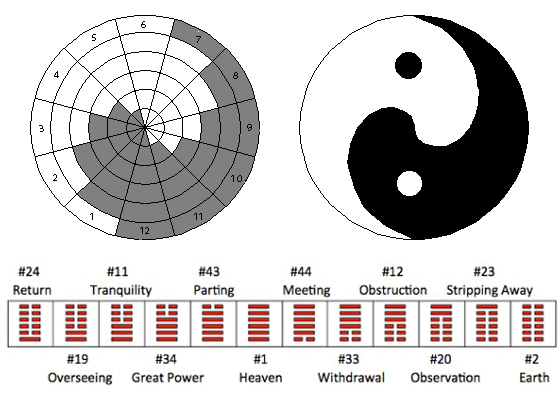
From that point, each day unfolds in twelve double-hours, each governed by one of the zodiac animals and corresponding to one of the twelve tidal hexagrams (十二辟卦). These hexagrams mark the waxing and waning of Yang energy throughout the day, much like the tides of the sea, and this is beautifully illustrated in the diagram above.
The 12 Zodiac Hours, Hexagrams, And Energies
| Hour (Time) | Branch | Zodiac Animal | Element & Polarity | Hexagram | Energetic Summary |
|---|---|---|---|---|---|
| 11pm–1am | 子 (Zǐ) | Rat | Yang Water | 24 – 復 (Fù), Return | Yang is reborn, inception, planning, quiet renewal. |
| 1–3am | 丑 (Chǒu) | Ox | Yin Earth | 19 – 臨 (Lín), Overseeing | Strength gathers in stillness, time for consolidation. |
| 3–5am | 寅 (Yín) | Tiger | Yang Wood | 11 – 泰 (Tài), Tranquillity | Yang rises, courage and initiative, dawn awakening. |
| 5–7am | 卯 (Mǎo) | Rabbit | Yin Wood | 34 – 大壯 (Dà Zhuàng), Great Power | Gentle strength, harmonious growth, steady action. |
| 7–9am | 辰 (Chén) | Dragon | Yang Earth | 43 – 夬 (Guài), Parting | Boldness, decisive action, morning surge of momentum. |
| 9–11am | 巳 (Sì) | Snake | Yin Fire | 1 – 乾 (Qián), Heaven | Peak clarity, strategic power, inward brilliance. |
| 11am–1pm | 午 (Wǔ) | Horse | Yang Fire | 44 – 姤 (Gòu), Meeting | Maximum Yang, leadership, visibility, decisive moves. |
| 1–3pm | 未 (Wèi) | Goat | Yin Earth | 33 – 遯 (Dùn), Withdrawal | Yang recedes, balance, teamwork, gentle grounding. |
| 3–5pm | 申 (Shēn) | Monkey | Yang Metal | 12 – 否 (Pǐ), Obstruction | Decline deepens, cleverness, adaptability, negotiation. |
| 5–7pm | 酉 (Yǒu) | Rooster | Yin Metal | 20 – 觀 (Guān), Observation | Yin strengthens, refinement, reflection, insight. |
| 7–9pm | 戌 (Xū) | Dog | Yang Earth | 23 – 剝 (Bō), Stripping Away | Yang nearly gone, grounding, loyalty, winding down. |
| 9–11pm | 亥 (Hài) | Pig | Yin Water | 2 – 坤 (Kūn), Earth | Pure Yin, dissolution, rest, renewal, womb of stillness. |
The Breathing Of Yang And Yin
Together, these twelve hexagrams illustrate the daily “breath” of Qi. Yang energy rises from midnight, surges to fullness at midday, then declines into Yin’s embrace by evening.
For the Shuyi practitioner, this map of time is not superstition; it is strategy. It tells us:
- When to act with boldness (Dragon, Snake, Horse).
- When to refine and stabilise (Goat, Monkey, Rooster).
- When to withdraw and replenish (Dog, Pig, Rat).
In this way, the I Ching teaches us to move with the tide rather than against it. Just as the sage in Hexagram 34 recognises the right time for great power, we recognise that timing is everything.
The Five Elements In Daily Flow
Layered within this cycle are the Five Elements:
- Wood (Tiger, Rabbit): Growth, beginnings, creativity.
- Fire (Snake, Horse): Action, visibility, expansion.
- Earth (Ox, Dragon, Goat, Dog): Grounding, stability, nurturing.
- Metal (Monkey, Rooster): Strategy, refinement, discernment.
- Water (Rat, Pig): Rest, renewal, hidden strength.
Over a single day, we move through all five phases of Qi, just as a life passes through the five stages of birth, growth, maturity, decline, and rest.
The Shuyi way invites us to honour these phases rather than resist them. In doing so, we align with what is natural, and our lives acquire both strength and ease.
Interpreting Yin/Yang Layers
Within this flow lies another subtlety: each elemental pair expresses itself in Yin and Yang polarity.
- Tiger (Yang Wood) brings the assertive push of growth, while Rabbit (Yin Wood) expresses gentler, harmonising expansion.
- Snake (Yin Fire) glows with inward clarity, while Horse (Yang Fire) blazes with outward force.
- Monkey (Yang Metal) cuts decisively, while Rooster (Yin Metal) refines and polishes.
- Rat (Yang Water) sparks renewal, while Pig (Yin Water) dissolves into stillness.
- Even Earth, appearing in four branches, alternates between Yang Earth’s stabilising force (Dragon, Dog) and Yin Earth’s nurturing support (Ox, Goat).
When we overlay this micro polarity on the macro tidal flow of the day, the message becomes clear:
- A Yang hour with a Yang branch (e.g. Horse at midday) is explosive, highly outward, and full of force.
- A Yang hour with a Yin branch (e.g. Snake in late morning) is outward but tempered, favouring strategy and balance.
- A Yin hour with a Yin branch (e.g. Pig late at night) is deeply still, perfect for dissolution and renewal.
- A Yin hour with a Yang branch (e.g. Dog in the evening) is stabilising, carrying strength even as decline sets in.
Thus, the Five Elements not only flow through the day, but each breathes with Yin and Yang, a rhythm within a rhythm, a wave within a wave.
Living The Shuyi Way Through Time
How does this look in practice?
- At Rat hour, we seed ideas in stillness.
- By Dragon and Snake hours, we act boldly, riding the tide of Yang.
- At Horse hour, visibility peaks, but awareness of decline begins.
- In the Goat and Monkey hours, refinement and adaptation replace force.
- By Pig hour, we return to stillness, knowing that rest is not idleness but preparation for rebirth.
This is the art of timing. It is not about doing more, but about knowing when to act, when the tide favours movement, and yielding when the tide favours rest. In this way, life itself becomes an act of Wu Wei, effortless action in harmony with the Dao.
Closing Reflection
The Shuyi Path is not rebellion for its own sake. It is alignment with truth, a refusal to be enslaved by convention. By studying the I Ching, the zodiac hours, and the tidal hexagrams, we learn that power is not constant, but cyclical.
The flow of hours, hexagrams, and zodiac signs is not just ancient wisdom; it is living guidance. When we respect the rhythms of Yin and Yang, our actions gain force, our rest gains depth, and our lives resonate with Heaven and Earth.
The day begins not at sunrise, but at the first spark of Rat hour. From that moment, through the Dragon’s surge, the Horse’s peak, the Dog’s decline, and the Pig’s rest, the cycle turns endlessly, beautifully, and with perfect balance.
To walk the Shuyi Path is to ride this cycle with awareness, never too early, never too late, but always in time.
If you feel drawn to explore how these rhythms connect to your own life path, the Shuyi numerology teachings offer a gateway. I share more here, and you’re welcome to reach out directly if you sense this calling.


